

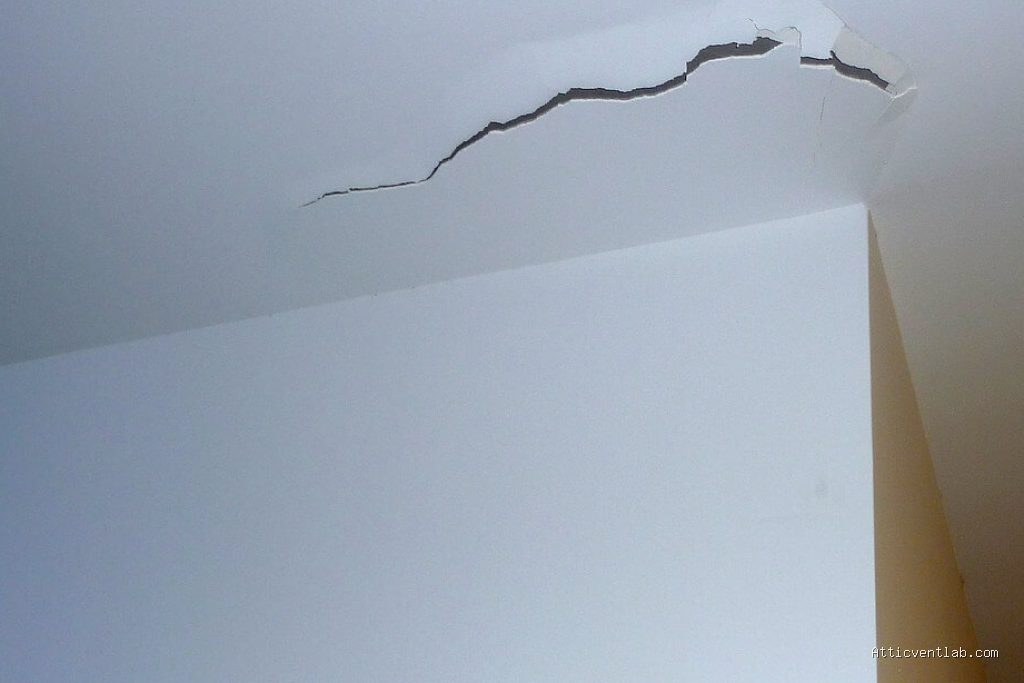
Atticventlab.com – Attic truss uplift is a structural phenomenon occurring in cold weather when the bottom chord of a roof truss bows upward due to moisture and temperature differentials, causing the drywall at the ceiling-wall junction to crack. This displacement happens because the top chord of the truss absorbs moisture and expands while the bottom chord remains dry and stable within the heated envelope of the home.
Understanding the Mechanics of Truss Uplift
The primary driver behind this issue is the difference in moisture content and thermal conditions between the top and bottom chords of a roof truss. During cold winter months, the insulation in your attic prevents heat from escaping, keeping the bottom chord of the truss relatively warm and dry. Conversely, the top chords are exposed to the freezing temperatures of the attic space, often leading to condensation or frost buildup.
As the top chord absorbs moisture from the attic air, it expands. Because the trusses are designed to be rigid triangles, this expansion exerts force on the web members and the bottom chord. The bottom chord, which is typically attached to the ceiling drywall, is forced to arch or “lift” away from the top plates of the interior walls. This movement creates a visible gap or a series of cracks along the perimeter where the ceiling meets the wall.
Why This Happens in Winter
While the movement is structural, the timing is seasonal. Cold weather increases the temperature gradient between the attic and the living space. When the attic is significantly colder than the house, the humidity levels within the truss wood fluctuate rapidly. This cycle of expansion and contraction is most pronounced when there is a significant shift in exterior temperatures, making the winter season the peak time for homeowners to notice these unsightly ceiling cracks.
Common Signs and Indicators
Many homeowners mistake truss uplift for foundation settlement or structural failure. However, there are distinct signs that differentiate truss uplift from more serious structural issues. The cracking is almost always located at the intersection of the ceiling and the exterior or interior walls, specifically where the trusses run perpendicular to the wall plates. If you notice the crack disappears during the warmer summer months as the wood shrinks back to its original position, it is almost certainly truss uplift.
Comparison of Truss Uplift vs. Foundation Settlement
Read also: How to Repair Leaking Counter Flashing on a Stucco Chimney with Reglet Metal
| Feature | Truss Uplift | Foundation Settlement |
|---|---|---|
| Location | Ceiling-wall junction | Walls, floors, and corners |
| Seasonality | Seasonal (Winter) | Permanent/Progressive |
| Crack Pattern | Horizontal (along the perimeter) | Diagonal (stair-step) |
| Structural Risk | Low (Cosmetic) | High (Stability issue) |
Practical Steps to Manage and Prevent Cracks
While you cannot stop the laws of physics from causing wood to expand, you can manage how the building materials respond to this movement. The most effective strategy involves decoupling the drywall from the trusses at the perimeter.
- Inspect the attic to ensure there is adequate ventilation, which helps keep the top and bottom chords at more consistent moisture levels.
- Ensure the attic insulation is properly installed, avoiding compression near the eaves, to maintain a consistent temperature across the bottom chord.
- If you are finishing or repairing a ceiling, use floating angle clips or metal drywall fasteners instead of screws at the corners where the wall meets the ceiling.
- Install a decorative crown molding that is attached only to the wall and not the ceiling, allowing the ceiling to move independently behind the molding.
- Use a flexible sealant or caulk at the wall-ceiling joint to hide minor gaps, as these materials can stretch without cracking when the truss moves.
The Risk of Ignoring the Issue
The primary risk of truss uplift is cosmetic. It is rarely a sign that your roof is collapsing or that the house is structurally unsound. However, if left unaddressed, the cracks can become quite large, allowing for air infiltration. This air leakage can lead to further energy loss, as warm air from the living space escapes into the attic, which ironically can exacerbate the moisture issues causing the uplift in the first place.
Common Mistakes to Avoid
One of the biggest mistakes homeowners make is attempting to repair the crack with rigid joint compound and tape during the winter. Because the truss is still in its “lifted” state, the repair will inevitably fail as soon as the weather warms up and the truss settles back down. Always wait until the seasonal movement has stabilized before attempting any cosmetic repairs to your drywall.
Another error is nailing the drywall too close to the wall corner. If the drywall is screwed into the truss too close to the wall, it forces the drywall to bend or crack under the pressure of the lifting truss. Providing a small gap and using a flexible trim piece is a much better solution for long-term aesthetics.
Frequently Asked Questions
Q: Is truss uplift a sign that my roof is dangerous?
A: No. In the vast majority of cases, truss uplift is a natural, seasonal movement of wood and does not threaten the structural integrity of your roof.
Q: Can I fix the cracks permanently?
A: You can hide them effectively by using floating corners or crown molding that isn’t nailed to the ceiling. Because the movement is caused by environmental factors, the wood will always move; you must accommodate that movement rather than trying to lock it in place.
Q: Does adding more insulation help?
A: Proper insulation helps regulate the temperature of the bottom chord, but it must be balanced with proper attic ventilation. If you trap too much heat or moisture, you might actually increase the likelihood of the truss bowing.
Final Thoughts on Maintenance
While truss uplift is frustrating for homeowners who value a pristine home interior, it is a well-understood phenomenon in modern construction. By focusing on flexible interior finishes and ensuring your attic environment is properly ventilated, you can minimize the visual impact of these seasonal shifts. If you are ever in doubt regarding the severity of a crack, consulting a structural engineer is always the safest path to ensure the issue is indeed just truss uplift and not something more significant.
📷 Photo by localdrywallrepair.com



1 Comments
[…] Read also: Causes of Attic Truss Uplift Cracking Drywall Ceilings in Cold Weather […]