

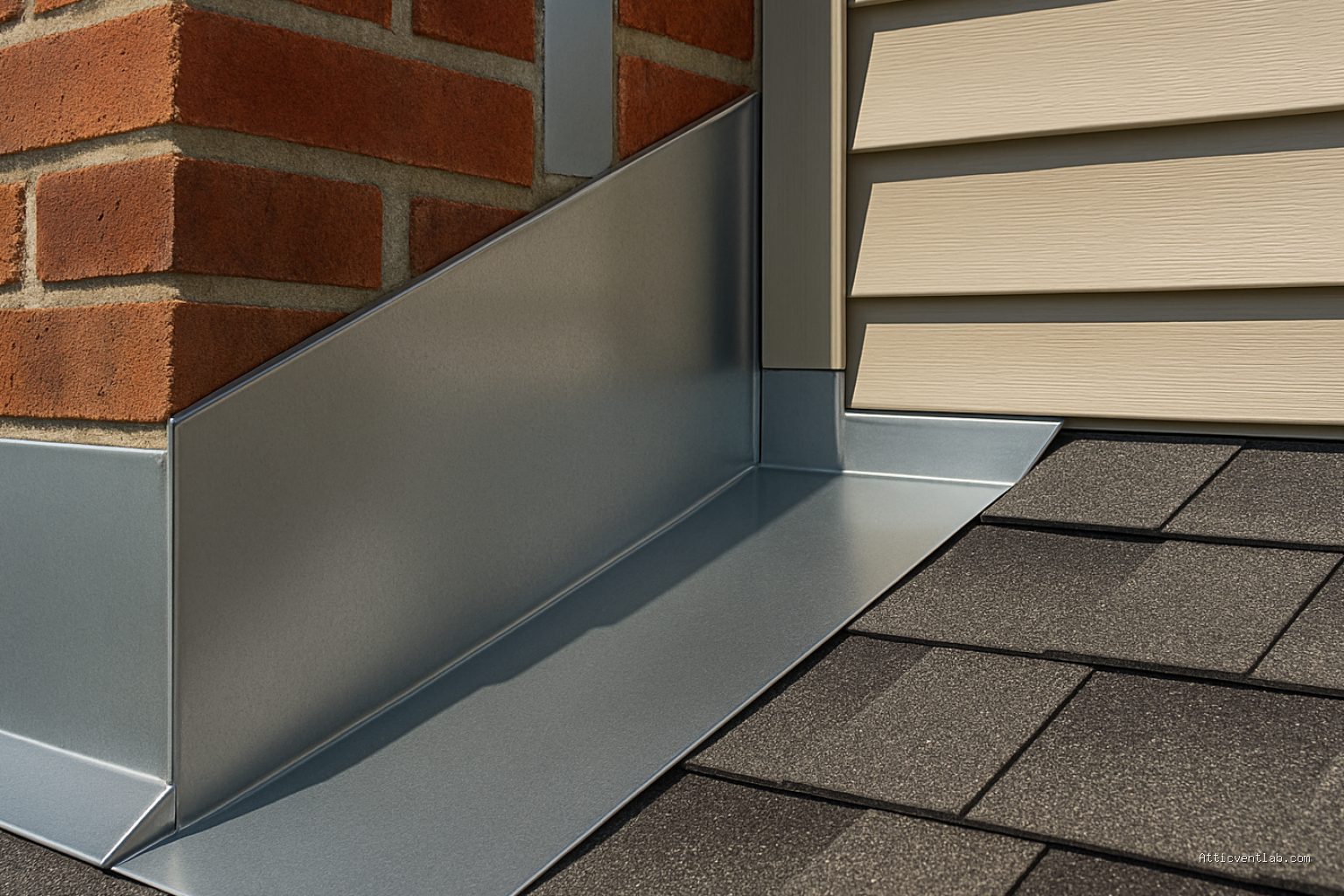
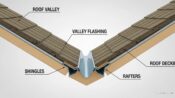
Atticventlab.com – Water siphoning in overlapping metal valley flashing occurs when capillary action draws moisture upward between sheets, typically caused by improper lap length, debris accumulation, or lack of sealant. This hidden intrusion eventually leads to localized rot in the roof deck and structural water damage if left unaddressed.
The Mechanics of Capillary Siphoning
Capillary action is a physical phenomenon where liquid flows into narrow spaces without the assistance of, or even in opposition to, external forces like gravity. In the context of metal valley flashing, the overlapping seams of the metal sheets create a microscopic gap. When water flows down the valley, surface tension pulls the droplets into this seam, forcing them to travel laterally or even upward beneath the upper layer of metal. Once the water breaches the lap, it settles directly onto the underlayment, which is often the weakest point of the roof assembly.
Common Signs of Siphoning
Identifying siphoning requires a keen eye, as the symptoms are often obscured by the roofing material itself. The most reliable indicator is the presence of intermittent dark streaks or moisture stains on the roof deck visible from the attic space. Unlike a direct puncture or tear, which creates a concentrated drip, siphoning often manifests as diffuse, slow-spreading water damage that follows the path of the valley rafters.
Another tell-tale sign is the appearance of rust or oxidation spots appearing specifically at the lap joints of the metal flashing. If you notice localized corrosion on the underside or at the edges of the overlapping sheets, it suggests that water is remaining trapped in the interface for extended periods. In colder climates, this trapped water may freeze, causing the metal to expand and further widen the gap, exacerbating the siphoning effect over time.
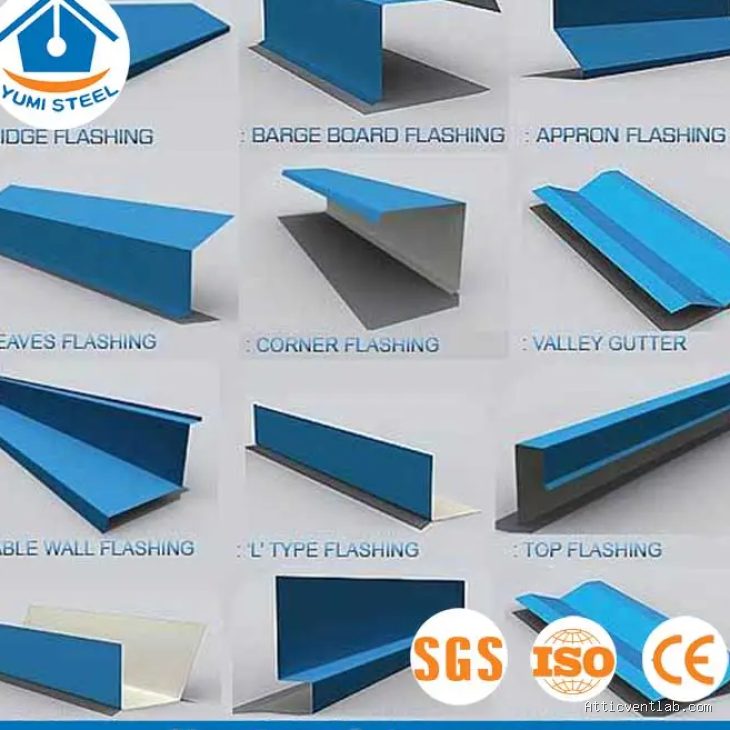
📷 Photo by yumisteel.com
Comparing Flashing Issues
| Issue | Primary Cause | Indicator |
|---|---|---|
| Capillary Siphoning | Insufficient lap length or lack of sealant | Diffuse staining along valley rafters |
| Mechanical Puncture | Fastener backing out or debris impact | Localized, rapid water entry |
| Debris Damming | Accumulation of pine needles/leaves | Overflowing water patterns at the valley |
Risks of Neglected Valley Flashing
The primary danger of water siphoning is that it is essentially invisible until the damage is severe. Because the moisture is being drawn directly onto the wood decking, the process initiates a cycle of rot that compromises the structural integrity of the roof frame. Over time, the plywood or OSB sheathing will soften, leading to sagging valleys. This creates a depression that further encourages water pooling, effectively accelerating the rate of failure.
Beyond structural concerns, constant moisture contact with metal flashing accelerates galvanic corrosion if the metal is incompatible with the fasteners used. If the underlayment beneath the metal becomes saturated, it can also lead to mold growth inside the attic. This can degrade the indoor air quality of the home, as the air pressure in the attic often pulls moisture and mold spores into the living spaces through ceiling penetrations and light fixtures.
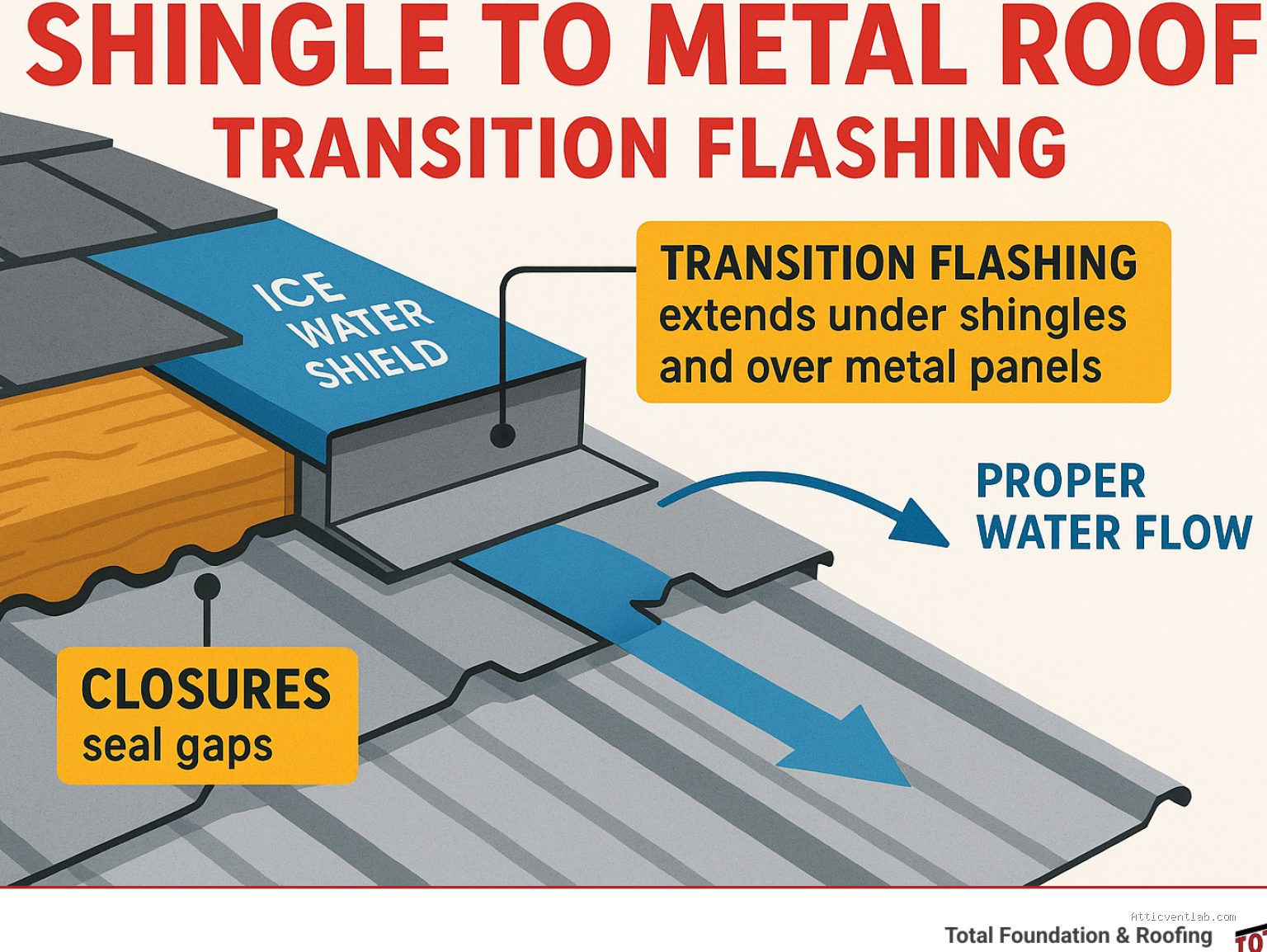
📷 Photo by totalfoundationandroofingrepair.com
Practical Steps to Mitigate Siphoning
If you suspect siphoning is occurring, or if you are installing new flashing, follow these steps to ensure a watertight seal that prevents capillary action from taking hold.
- Ensure a minimum lap length of 12 inches for all valley flashing segments to provide a sufficient buffer against upward moisture movement.
- Apply two rows of high-quality butyl-based sealant between the overlapping layers, keeping the beads set back from the edge to avoid squeezing out.
- Install a secondary layer of ice and water shield (self-adhered membrane) beneath the entire length of the metal valley to provide a redundant waterproof barrier.
- Regularly clear the valley of leaf litter and pine needles, as wet debris creates a dam that holds water against the lap, significantly increasing the pressure for siphoning.
- Verify that the metal flashing is properly hemmed at the edges, which breaks the surface tension of the water and encourages it to drip off rather than be drawn under the sheet.
Common Installation Errors
One of the most frequent mistakes made by installers is failing to account for the thermal expansion and contraction of metal. If the flashing is nailed too tightly through the flat of the valley, the metal will buckle, creating high spots that disrupt the flow of water and open the laps. Always use clips or allow for movement in the fastener pattern to ensure the metal remains flat against the deck.
Another error is the use of substandard sealant or failing to use it altogether. Many installers believe that the weight of the metal and the overlap alone are sufficient. However, in low-slope valleys, the volume of water is often high enough to overcome gravity, making a continuous, uninterrupted bead of sealant an absolute necessity for long-term performance.
Frequently Asked Questions
Q: Does the pitch of my roof affect the likelihood of siphoning?
A: Yes, lower-pitched roofs are significantly more susceptible because water moves slower and stays in contact with the flashing laps for a longer duration, providing more time for capillary action to occur.
Q: Can I fix siphoning by just applying caulk to the outside of the seam?
A: Applying sealant to the exterior edge is rarely effective and often counterproductive. It can trap water that has already entered the seam, preventing it from draining out and accelerating rot; the sealant must be applied between the overlapping layers during installation.
Q: How often should I inspect my valley flashing?
A: You should perform a visual inspection of your roof valleys at least twice a year, ideally after the fall leaf drop and after the spring thaw, to remove debris and check for visible signs of metal shifting or corrosion.
Maintaining the integrity of your valley flashing is one of the most critical aspects of roof longevity. By understanding the subtle mechanics of how water behaves at these junctions, homeowners can transition from reactive repairs to proactive maintenance. If you notice recurring moisture issues, do not wait for the decking to soften; address the laps immediately to prevent expensive structural repairs.
Read also: How to Measure Attic Net Free Venting Area to Comply with Building Standards
📷 Photo by americanqualityremodeling.com





1 Comments
[…] Read AlsoSigns of Water Siphoning Between Overlapping Metal Valley Flashing Sheets […]