

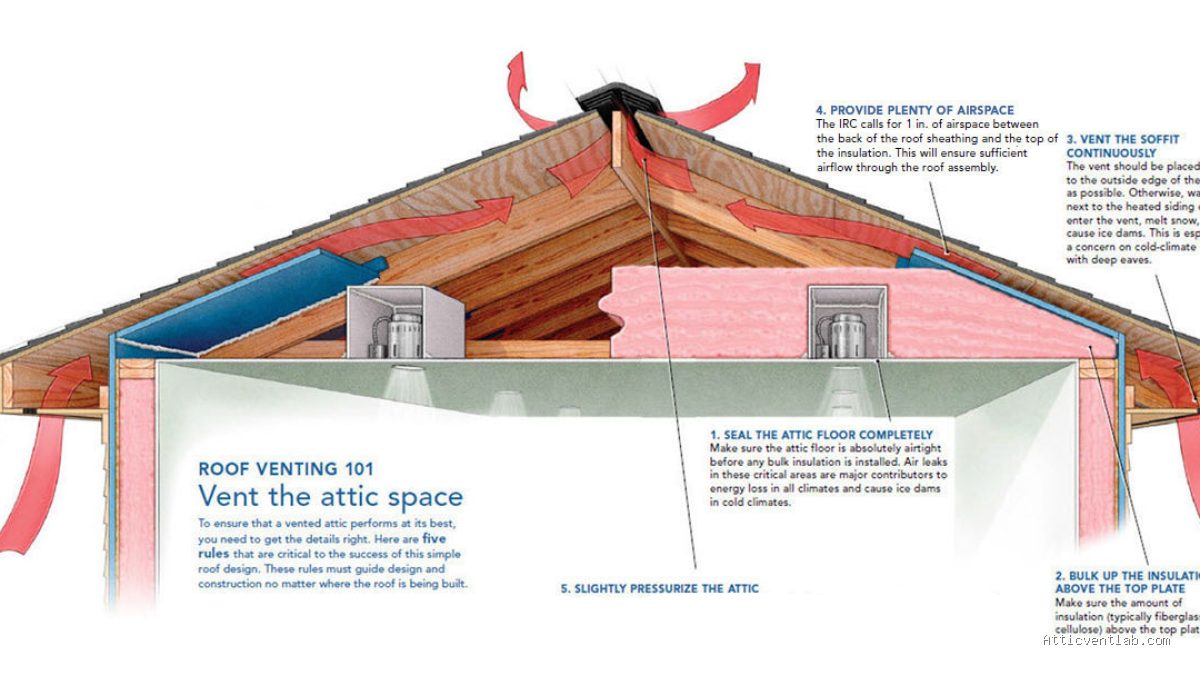
Atticventlab.com – Gable vents and ridge vents should never be used together because they create a short-circuiting airflow pattern that prevents hot, moist air from being properly exhausted from the entire attic space. When both are installed, fresh air entering the gable vents is immediately pulled out through the nearby ridge vent, leaving stagnant air pockets in the rest of the attic and potentially drawing moisture into the roof structure.
The Mechanics of Attic Ventilation
To understand why these systems conflict, one must first look at how they are designed to function independently. A ridge vent system relies on the stack effect, where cool, fresh air enters through soffit vents at the lowest point of the roof and exits through the ridge vent at the highest point. This creates a continuous, bottom-to-top flow that flushes the entire attic cavity.
Gable vents, conversely, function based on cross-ventilation. They require wind pressure to push air in one side and out the other. When you introduce a ridge vent into a system already equipped with gable vents, you destroy the natural pressure balance. The air takes the path of least resistance, which is usually the short distance between the gable end and the closest section of the ridge vent, effectively bypassing the rest of the attic.
Why Short-Circuiting Is a Major Risk
Short-circuiting is more than just an efficiency issue; it is a structural liability. When air flow is disrupted, the attic loses its ability to regulate temperature and humidity. In the summer, this leads to heat buildup that can prematurely age asphalt shingles, potentially voiding manufacturer warranties. In the winter, the failure to exhaust moist air leads to condensation on the underside of the roof deck.
This trapped moisture is the primary catalyst for mold growth and wood rot. Because the ridge vent is pulling air from the gable vent rather than the soffit, the air near the eaves—the most vulnerable part of the roof—remains stagnant. Over time, this creates a localized high-humidity environment that provides the perfect breeding ground for fungal decay.
Common Ventilation Configurations
| Ventilation Type | Primary Air Source | Best For | Compatibility with Ridge Vents |
|---|---|---|---|
| Soffit Vents | Under Eaves | All Standard Roofs | Perfect (Required) |
| Gable Vents | Wind Pressure | Passive/Old Homes | None (Conflict) |
| Power Attic Fans | Mechanical | Large Attics | Low (Often Conflicts) |
How to Properly Seal Gable Vents
If you have recently upgraded your home with a ridge vent system, you must deactivate or seal your existing gable vents to ensure the new system functions correctly. Leaving them open is a common oversight that undermines professional roof installations.
- Inspect the attic during a sunny day to locate the gable vents and identify any light leaks or air movement.
- Measure the interior dimensions of the gable vent opening to determine the size of the blocking material required.
- Cut a piece of rigid foam insulation or exterior-grade plywood to fit snugly into the opening.
- Secure the material using construction adhesive or mechanical fasteners to ensure an airtight seal.
- Seal the perimeter of the patch with high-quality exterior caulk or expanding foam to prevent air infiltration.
- Verify that the soffit vents are clear and unobstructed to ensure they are now the sole intake source for your attic.
Recognizing the Signs of Poor Ventilation
It is often difficult to detect ventilation issues until damage is already occurring. Homeowners should perform a seasonal check of their attic space. If you notice signs of moisture, such as rust on nail heads or dark staining on the roof sheathing, your ventilation system is likely compromised. Another indicator is the formation of ice dams during the winter months, which often result from an attic that is too warm due to trapped heat.
Furthermore, if your energy bills spike during the summer without a corresponding increase in usage, your HVAC system may be working overtime to combat the heat radiating down from an improperly ventilated attic. Proper ventilation is not just about roof longevity; it is a critical component of home energy efficiency.
Common Mistakes in Attic Management
One of the most frequent errors is the belief that “more vents are better.” Many homeowners assume that adding extra intake or exhaust points will increase airflow. However, attic ventilation is a precision game. Adding a ridge vent while keeping gable vents open is similar to trying to inflate a balloon that has multiple holes; the pressure is never sufficient to achieve the intended result.
Another mistake is blocking soffit vents with insulation. Even if you have a perfect ridge vent, it cannot work without a clear intake path. If your insulation is pushed all the way to the edge of the roof deck, it chokes the system, forcing the ridge vent to pull air from whatever source it can find—often causing it to pull in moisture from outside rather than exhausting it from inside.
Q: Can I keep my gable vents open if I use a powered exhaust fan instead of a ridge vent?
A: Generally, no. Powered fans also rely on proper intake from soffits. Open gable vents will cause the fan to draw air from the gables instead of the soffits, leaving the lower roof deck prone to condensation.
Q: How do I know if my soffit vents are working properly?
A: You can perform a simple smoke test. On a day with a light breeze, hold a smoke pencil near the soffit vents while the attic is closed. If the smoke is pulled into the attic, your intake is functioning as intended.
Q: Is it ever acceptable to have both vent types?
A: Only in very specific, complex architectural designs where the attic is partitioned into separate, isolated zones. For 99% of residential homes, the two systems must be separated to prevent airflow conflict.
Conclusion
Achieving a balanced attic ventilation system requires a commitment to a single, cohesive strategy. By prioritizing a ridge-and-soffit configuration and eliminating competing ventilation sources like gable vents, you ensure that your roof deck remains dry, cool, and durable. Always prioritize a clear path from the eaves to the peak to maximize the natural stack effect and protect your home from the silent damage of trapped moisture.
📷 Photo by blog.j2consultants.com


Leave a Reply