

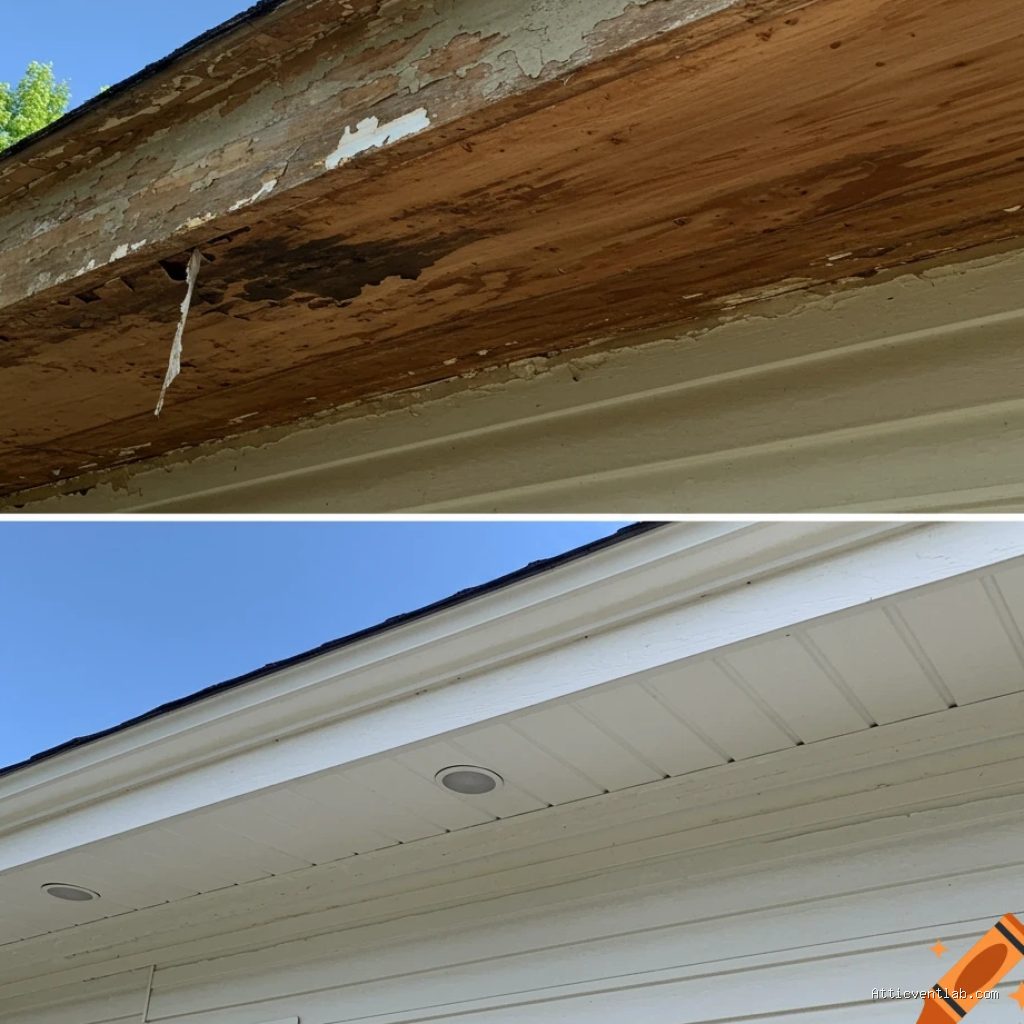
Atticventlab.com – Dry rot on soffit overhangs caused by trapped attic steam is identified by darkened, crumbling wood, peeling exterior paint, and localized fungal growth near the eaves, which occurs when moist, warm air from the interior condenses against cold roof decking. This process leads to structural decay that can compromise the entire roofline if left unaddressed.
The Mechanics of Attic Steam and Soffit Decay
Attic steam, often referred to as moisture vapor, is a silent byproduct of daily household activities. When warm, humid air rises from kitchens, bathrooms, and laundry areas, it seeks the path of least resistance. Without adequate ventilation, this air reaches the cold underside of the roof sheathing and the soffit area. As the temperature drops, the water vapor turns into liquid condensation.
Over time, this constant moisture saturation prevents the wood from drying out. Fungi, specifically those that thrive on cellulose, begin to digest the wood fibers. Unlike wet rot, which feels spongy, dry rot (Serpula lacrymans) spreads through wood by drawing moisture from the surrounding environment, essentially creating its own micro-climate of destruction behind your soffit boards.
Common Signs of Hidden Damage
Detecting dry rot early is crucial because the damage is often hidden behind exterior cladding. One of the first indicators is a musty, earthy smell emanating from the eaves. You may also notice the paint on your soffits beginning to blister, crack, or flake away in specific areas, even if the rest of the house exterior is in good condition.
If you suspect damage, perform a physical inspection. Use a screwdriver to gently press into the wood. If the wood feels soft, brittle, or crumbles into small, cube-like fragments, you are likely dealing with advanced dry rot. In severe cases, you might see “mycelium,” which looks like white or grayish cotton-like strands spreading across the surface of the timber.
Comparison of Moisture Symptoms
| Indicator | Dry Rot | Wet Rot | |
|---|---|---|---|
| Texture | Brittle, cube-like cracking | Spongy, soft to the touch | |
| Color | Dark brown or gray | Blackened or dark brown | |
| Growth Pattern | Spreads across masonry/materials | Localized to wet wood |
Risks of Ignoring Soffit Rot
Ignoring these signs poses significant risks to your home’s structural integrity. Because the soffit is a critical part of the roof’s ventilation system, its degradation often indicates that the intake vents are blocked or ineffective. As the rot progresses, it can migrate from the soffit boards into the rafter tails and the fascia board, which supports your gutters. Once the rot reaches these structural members, the cost of repair increases exponentially, potentially requiring a partial roof replacement.
Steps to Mitigate and Repair Moisture Issues
If you have confirmed the presence of rot, you must first stop the moisture source before attempting repairs. Follow these steps to address the problem systematically.
- Inspect your attic insulation to ensure it is not blocking the soffit intake vents. Insulation should be pulled back from the eaves to allow a clear path for airflow.
- Install or upgrade baffle vents. These plastic channels ensure that the air intake from the soffit is not choked by insulation, allowing moisture to escape before it condenses.
- Remove all affected wood. Dry rot spreads, so you must cut away the damaged sections and at least one foot of the surrounding healthy wood to ensure no fungal spores remain.
- Treat the exposed areas with a professional-grade wood preservative or fungicide to kill any remaining spores.
- Replace the damaged soffit boards with pressure-treated lumber or moisture-resistant materials like PVC or fiber cement, which do not harbor fungal growth.
- Seal any gaps between the soffit and the exterior wall to prevent future moisture intrusion.
Common Mistakes in Prevention
Many homeowners make the mistake of sealing the soffit vents completely to stop drafts. This is counterproductive; the attic needs to breathe. Another common error is failing to address the primary source of the steam. If your bathroom exhaust fan vents directly into the attic rather than out through the roof or wall, you are pumping moisture directly into the space that needs to stay dry. Ensure all exhaust ducts are properly sealed and directed outside.
Frequently Asked Questions
Q: Can I just paint over the rot to hide it?
A: Absolutely not. Painting over dry rot traps the moisture inside and accelerates the decay process. The rotted wood must be removed and the underlying moisture issue resolved before any cosmetic work is done.
Q: Does attic ventilation really stop rot?
A: Yes, proper ventilation acts as a humidity management system. By allowing air to circulate, you ensure that any moisture that enters the attic is carried out before it can condense on the structural wood components.
Q: Is it safe to repair soffit rot myself?
A: If the damage is limited to the soffit boards, a skilled DIYer can handle it. However, if the rot has reached the rafter tails or the roof decking, it is recommended to consult a professional contractor to ensure the structural load of the roof remains supported during the repair.
Read also: Why Fasteners Snap on Standing Seam Metal Roofs During Winter Freezes
📷 Photo by craiyon.com




1 Comments
[…] Read also: Signs of Dry Rot on Soffit Overhangs Caused by Trapped Attic Steam […]