

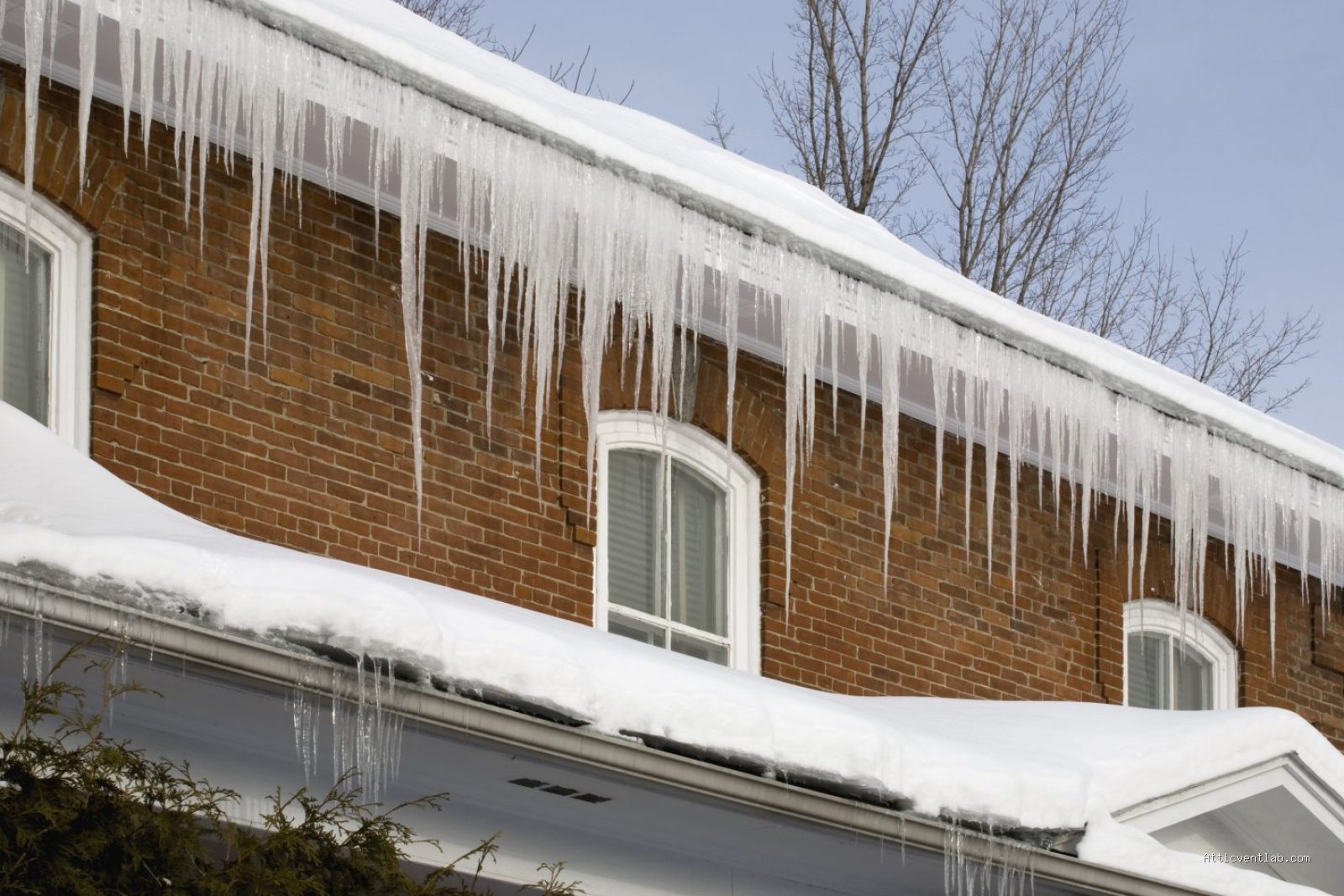
Atticventlab.com – Ice dams form when heat escaping from a poorly ventilated attic melts roof snow, which subsequently refreezes at the cold eaves, creating a barrier that forces water to back up under shingles.
The integrity of your roofing system depends heavily on a delicate thermal balance. When this balance is disrupted by inadequate attic airflow, the roof surface temperature becomes inconsistent. The upper portion of the roof remains warm enough to melt snow even when ambient temperatures are well below freezing, while the eaves—which hang over the unheated exterior walls—remain at freezing temperatures. This temperature gradient is the primary culprit behind the hazardous cycle of melting and refreezing that characterizes ice dam formation.
The Mechanics of Attic Heat Loss
Under ideal conditions, an attic should act as a cold buffer zone. The temperature inside the attic should be as close to the outside temperature as possible. However, when attic ventilation is poor, heat from your living space migrates upward. This heat often escapes through gaps in the ceiling, such as around light fixtures, plumbing stacks, or attic hatch doors. If the insulation is insufficient or unevenly distributed, this heat conducts directly to the roof deck.
As the snow on the roof melts, the resulting water trickles down toward the gutters. Because the gutters are situated at the edge of the roof, they are not warmed by the attic heat. As soon as the water reaches this cold zone, it refreezes. Over time, this ice layer thickens into a dam. Once the dam is established, it prevents subsequent snowmelt from draining, creating a pool of standing water that can easily seep beneath the shingles and into your home’s interior, causing significant water damage to walls, ceilings, and insulation.
Why Poor Ventilation Compounds the Problem
Many homeowners mistakenly believe that adding insulation is the only solution to ice dams. While insulation is critical, it is only half of the equation. Without proper airflow, even the best insulation can become compromised by moisture or become ineffective at dissipating trapped heat. Proper ventilation works by constantly flushing out warm air and replacing it with cold exterior air.
If your soffit vents are blocked by insulation or if your ridge vents are inadequate, the air in your attic becomes stagnant. This trapped air acts like a heating blanket, continuously warming the underside of the roof deck. The lack of active airflow ensures that the roof surface remains warm enough to sustain a melt cycle throughout the entire winter, regardless of how cold the outside air might be.
Common Signs of Impending Ice Dams
Recognizing the symptoms early can save you thousands in restoration costs. Keep an eye out for icicles hanging from your gutters, which are often the first visual indicator that melting is occurring where it shouldn’t be. Additionally, if you notice water stains on your top-floor ceilings or walls during a cold snap, you are likely already dealing with water intrusion caused by an ice dam.
Another common sign is the presence of frost on the underside of your roof sheathing. If you go into your attic and see frost or wetness on the wood, it indicates that warm, moist air is escaping from the house and condensing. This is a clear warning that your ventilation system is failing and that the conditions are perfect for an ice dam to form.
Comparative Analysis of Attic Ventilation Components
| Ventilation Type | Primary Function | Limitations |
|---|---|---|
| Soffit Vents | Intake of cool, fresh air | Frequently blocked by insulation |
| Ridge Vents | Exhaust of warm, moist air | Ineffective without clear intake flow |
| Gable Vents | Cross-ventilation | Often insufficient for large attics |
| Power Ventilators | Mechanical air movement | Can pull conditioned air from the house |
Steps to Improve Attic Airflow and Prevent Ice Dams
- Inspect your soffit vents to ensure they are not blocked by attic insulation or debris; install baffle chutes if necessary to maintain an open air channel.
- Seal all bypasses where warm air escapes from your home into the attic, such as around electrical wires, plumbing pipes, and recessed lighting.
- Verify that your attic insulation meets the recommended R-value for your climate zone to minimize heat conduction to the roof deck.
- Confirm that your ridge vent or other exhaust vents are unobstructed and that there is a balanced ratio of intake to exhaust airflow.
- Monitor the attic temperature throughout the winter months to ensure it remains close to the outdoor ambient temperature.
The Risks of Ignoring Attic Ventilation
Ignoring poor airflow does more than just create ice dams. It shortens the lifespan of your roof shingles significantly. The constant thermal cycling—expansion and contraction of the roof materials—leads to premature cracking and granule loss. Furthermore, moisture buildup in the attic due to poor ventilation promotes mold growth on roof trusses and sheathing. This can compromise the structural integrity of your roof framing over time and create poor indoor air quality, which can eventually impact the health of the home’s occupants.
Common Mistakes in Attic Management
A frequent error is the installation of power fans in an attempt to solve ventilation issues. These fans can sometimes create negative pressure, pulling warm, conditioned air from your living space through cracks in the ceiling, which actually accelerates the melting process on the roof. Another mistake is “over-insulating” without addressing the air sealing. Insulation slows heat transfer, but air leaks transport heat directly through convection. You must seal the air leaks first, then insulate, and finally ensure the ventilation channels are free and clear.
Q: Can removing snow from the roof stop an ice dam?
A: Removing snow with a roof rake can provide temporary relief by reducing the weight and potential meltwater, but it does not fix the underlying ventilation issue that causes the dam to reform.
Q: Should I block my attic vents in the winter to keep the house warmer?
A: Never block attic vents. Doing so traps heat and moisture, which is a leading cause of ice dams and long-term structural damage from mold and wood rot.
Q: Is it possible to have too much ventilation?
A: While a balanced system is ideal, having more ventilation is generally safer than having too little, provided the insulation is properly installed to prevent the ceiling from feeling cold to the touch.
Addressing these airflow issues requires a systematic approach. By combining proper sealing, adequate insulation, and unobstructed ventilation, you create a roof environment that remains cold in the winter. This prevents the initial melt-refreeze cycle and protects your property from the costly damage that ice dams inevitably cause.
📷 Photo by muthroofing.com


Leave a Reply