

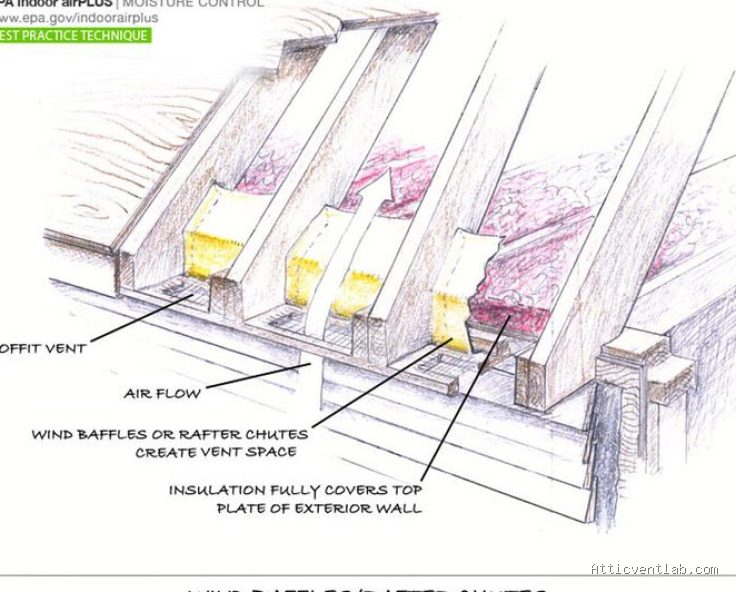
Atticventlab.com – Crushed attic baffle chutes manifest through localized ice dams, sudden spikes in energy bills, and persistent moisture buildup in roof sheathing, indicating that your ventilation path is physically obstructed. When these chutes collapse or compress, the essential intake airflow from your soffits is choked off, leading to heat entrapment that compromises both your roof structure and insulation performance.
The Mechanics of Attic Ventilation
Your attic acts as a thermal buffer between your living space and the outside environment. Attic baffles, also known as rafter vents, are designed to create a physical channel between the insulation and the roof deck. This channel ensures that fresh, cool air from the soffit vents can travel up to the ridge vent, effectively flushing out humid air. When these baffles are crushed, the “stack effect” is broken. Without this constant flow, the attic temperature rises, creating the perfect conditions for rot, mold, and premature shingle failure.
Common Causes of Crushed Baffles
The most frequent culprit for crushed baffles is improper installation of blown-in insulation. Contractors often push cellulose or fiberglass insulation too close to the eaves, burying the baffle and exerting outward pressure that snaps the plastic or cardboard material. Another common cause is the settling of heavy batt insulation that has been poorly secured. Over time, the weight of the material pushes against the baffle, causing it to buckle inward, effectively pinching the airway shut.
Identifying Physical Signs of Failure
You do not always need to crawl into the tightest corners of your attic to spot trouble. Often, the signs are visible from the exterior of your home. If you notice icicles forming along the roof edge during freezing temperatures, it is a primary indicator of “warm” roof decking caused by poor ventilation. If the roof deck is warm, the snow melts and then refreezes at the cold eaves, creating ice dams that can force water back under your shingles.
Inside the attic, look for dark staining on the underside of the roof sheathing. This is a sign of condensation. When warm, moist interior air meets a cold roof deck that lacks proper ventilation, it turns into water droplets. If left unchecked, this moisture leads to mold growth, which often appears as black or green speckling on the wood rafters.
Comparison of Baffle Materials and Durability
| Material Type | Common Failure Mode | Durability Level |
|---|---|---|
| Cardboard Baffles | Moisture degradation and collapse | Low |
| Thin Plastic Baffles | Cracking and brittle snapping | Medium |
| Rigid Foam/Styrofoam | Compression under insulation weight | High |
| Heavy-Duty PVC | Resistant to physical crushing | Very High |
Practical Steps to Inspect and Repair Attic Baffles
If you suspect your ventilation is compromised, follow this structured approach to diagnose and fix the issue. Always wear a respirator and eye protection when entering an attic environment.
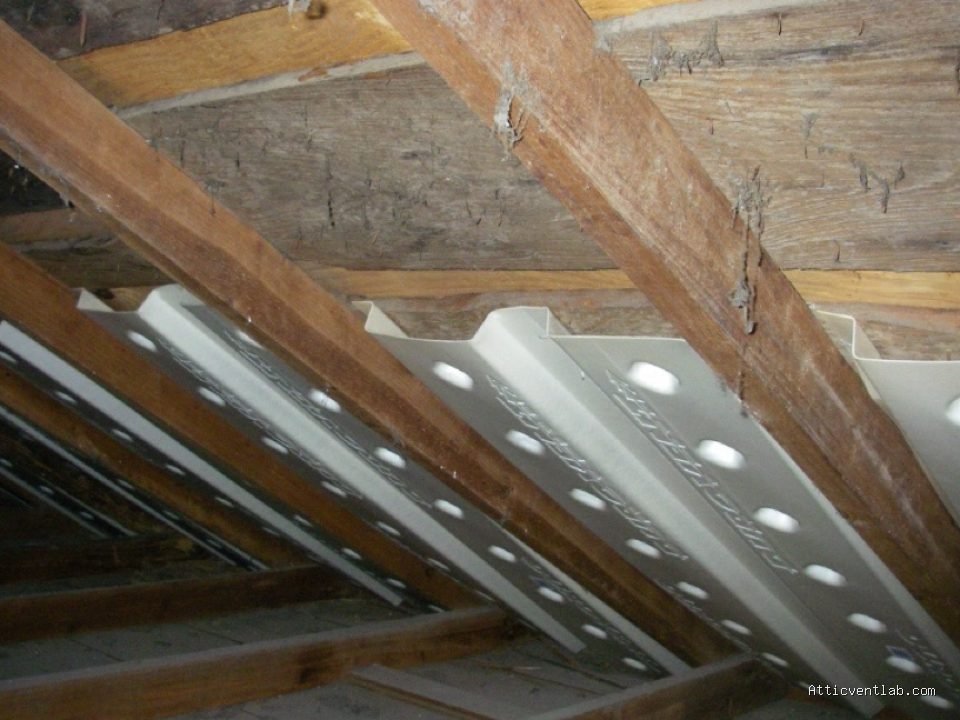
📷 Photo by storage.googleapis.com
- Conduct a visual sweep with a high-lumen flashlight, focusing specifically on the soffit intake areas where the roof deck meets the wall top plate.
- Check for “insulation creep,” where loose-fill material has spilled over the top of the baffle or pushed the baffle inward toward the rafters.
- Use a long, thin rod or a stiff piece of wire to gently probe the channel; if you encounter heavy resistance or feel the baffle material touching the roof deck, it is likely crushed.
- Remove the damaged sections carefully, ensuring you do not disturb the surrounding insulation, and clear away any debris that has fallen into the soffit opening.
- Install new, rigid baffles that are specifically designed for your rafter spacing, ensuring they are stapled securely to the rafters to prevent future movement.
The Risks of Neglecting Airflow
Ignoring crushed baffles is a high-stakes gamble. Beyond the immediate threat of ice dams, the long-term structural integrity of your home is at risk. Wood rot in the roof rafters can go unnoticed for years, slowly weakening the structural support of your roof. Furthermore, your HVAC system will work significantly harder during the summer months to cool your home, as the trapped heat in the attic radiates downward through the ceiling, rendering your expensive insulation ineffective.
Common Mistakes During Remediation
A frequent error made by homeowners is attempting to “clear” the baffles by simply pushing the insulation back with a rake or shovel. This often results in further damaging the already fragile baffle material. Another mistake is installing baffles that are too short. The baffle must extend from the soffit area up past the top of the attic insulation line to be effective. If the baffle ends inside the insulation layer, it serves no purpose in directing airflow.
Frequently Asked Questions
Q: Can I replace crushed baffles without removing all the insulation?
A: Yes, you can usually replace them by carefully clearing a narrow path to the eaves, though it requires caution to avoid compacting the insulation in surrounding areas.
Q: How do I know if my soffit vents are blocked by something other than baffles?
A: You can check from the exterior using a flashlight at night; if you cannot see light shining through the soffit vents into the attic, or if you see debris like bird nests, the blockage may be external.
Q: Does adding more insulation help if the baffles are crushed?
A: Absolutely not; adding more insulation on top of crushed baffles will only worsen the airflow restriction and accelerate the accumulation of moisture in your attic.
Maintaining a clear ventilation path is not just about temperature control; it is a critical component of building science. By ensuring your attic baffles remain intact and unobstructed, you protect your investment, lower your utility costs, and extend the lifespan of your roofing system. Regular biannual inspections are the most effective way to catch these issues before they manifest into costly structural repairs.
📷 Photo by pinterest.com


Leave a Reply