

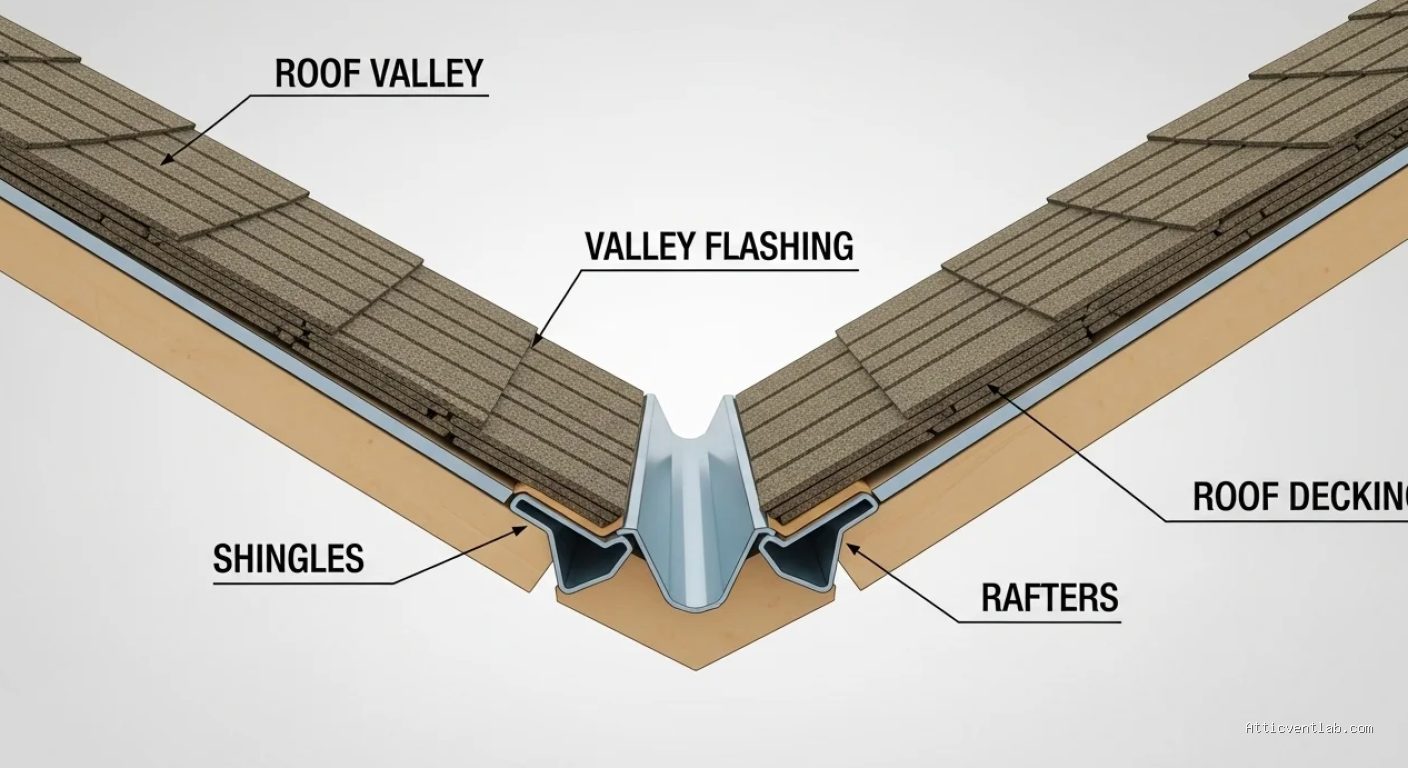
Atticventlab.com – Concentrated granule loss in open metal valleys typically indicates that high-velocity water runoff is scouring the shingles, often exacerbated by improper flashing installation, debris accumulation, or reaching the end of the roof’s functional lifespan.
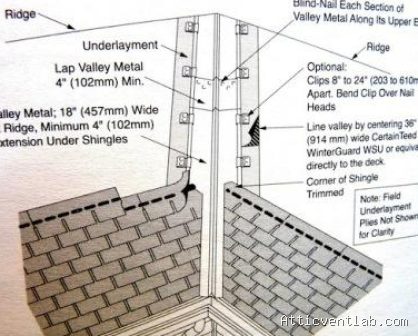
📷 Photo by nachi.org
Understanding the Mechanics of Valley Erosion
Open metal valleys are designed to be the primary drainage channels for a roof, handling significantly more water volume than the field shingles. When shingles show excessive granule loss specifically in these areas, it is rarely a random occurrence. The combination of high-speed water flow, thermal expansion of the metal flashing, and the abrasive nature of trapped debris creates a perfect storm for premature wear.
The granules on asphalt shingles serve as a protective layer against ultraviolet radiation and physical abrasion. Once these granules are stripped away, the underlying asphalt mat is exposed directly to the elements. This exposure leads to rapid hardening, cracking, and eventual water infiltration. In valleys, this process is accelerated because the metal flashing expands and contracts at a different rate than the surrounding shingles, creating a mechanical shear force that dislodges granules over time.
Common Causes of Concentrated Granule Loss
The most frequent culprit is improper shingle trimming at the valley edge. If shingles are cut too close to the center of the metal valley, they are subjected to constant water turbulence. This turbulence creates a “sandpaper effect” where the water carries grit and debris that grinds against the shingle edges. Furthermore, if the valley metal was installed without a proper “crimp” or “V-bend,” water can seep underneath the shingle edges, causing the adhesive strips to fail and the shingles to lift, further exposing them to wind and water erosion.
Another often overlooked cause is the accumulation of organic debris. Leaves, pine needles, and twigs act like sponges, holding moisture against the shingle edges for extended periods. This constant dampness promotes the growth of moss and algae, which have root-like structures that penetrate the shingle surface and pry granules loose. When this debris is washed down the valley during heavy rain, it acts as an abrasive slurry, scouring the surface of the shingles.
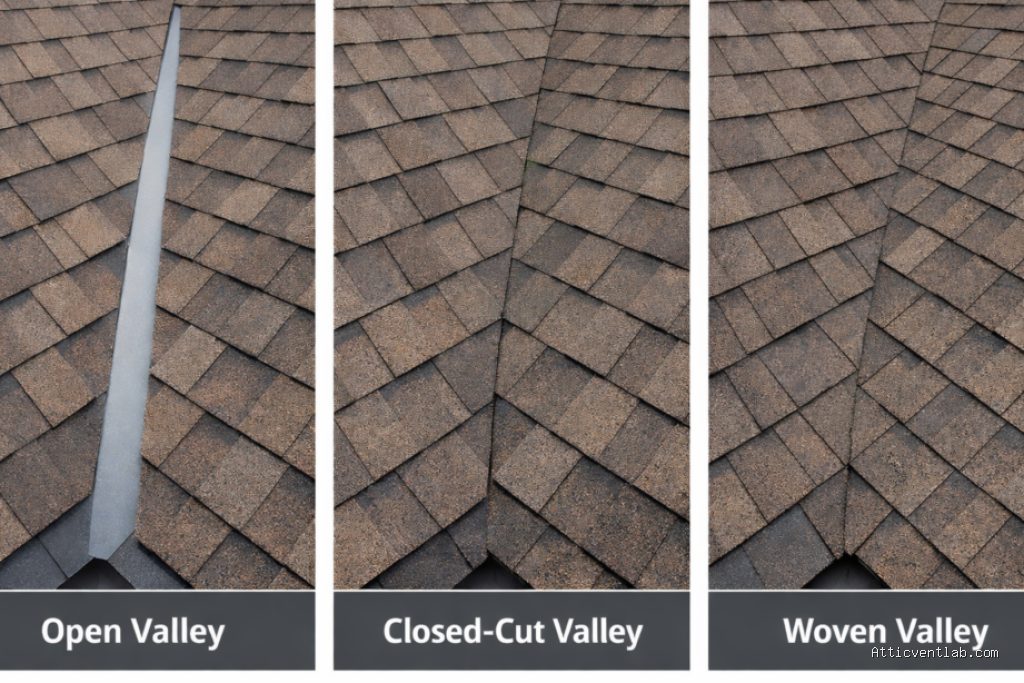
📷 Photo by peakandvalleyroofing.com
Comparison of Valley Conditions
| Condition | Visual Indicator | Risk Level |
|---|---|---|
| Normal Aging | Uniform granule loss across the entire roof | Low |
| Poor Drainage | Granules gathered in downspouts and gutters | Moderate |
| Valley Erosion | Concentrated bald spots along metal edges | High |
| Flashing Failure | Curled shingle edges and exposed metal | Critical |
Steps to Inspect and Assess Valley Damage
If you suspect that your roof is suffering from concentrated granule loss in the valleys, you should perform a systematic inspection. Safety is paramount; never walk on a steep roof or one that is damp, as granule loss often creates a slippery surface that is significantly more hazardous than intact shingles.
- Clear all debris from the roof surface, paying special attention to the valleys, using a soft-bristled brush to avoid dislodging more granules.
- Examine the metal flashing for signs of warping, rust, or loose nails that might be catching water or debris.
- Check the alignment of the shingle edges; ensure they are cut back at least two inches from the center of the valley to allow for unobstructed water flow.
- Observe the shingle surface for “bald spots” where the black asphalt mat is visible; check if these areas feel brittle or show signs of alligator cracking.
- Inspect the gutters at the base of the valley; a significant buildup of granules in the gutter system is a definitive sign that the shingles are reaching the end of their protective life.
The Risks of Ignoring Valley Erosion
Ignoring concentrated granule loss in valleys is a precursor to major interior water damage. Because valleys collect the most water, any breach in the shingle integrity will lead to rapid saturation of the underlayment. Unlike a flat section of the roof where water might evaporate, a valley is a funnel; a small leak here will be magnified by every rainstorm, leading to rot in the roof decking and rafters.
Furthermore, this type of wear often indicates that the roofing contractor may have cut corners during the installation process. If the shingles were not properly sealed with high-quality roofing cement at the valley edges, the wind can easily lift them. Once lifted, the shingle loses its structural integrity, and the wind begins to vibrate the material, shaking off even more granules and weakening the bond with the underlying felt paper.
Proactive Maintenance Tips
Regular maintenance is the most effective way to extend the life of your roof. Aim to have your roof inspected by a professional at least once a year, specifically after the autumn season when debris accumulation is at its peak. Ensure that tree limbs are trimmed back at least six to ten feet from the roofline to reduce the volume of debris that can settle into the valleys.
If you find that the granule loss is severe but the rest of the roof is in good condition, a professional roofer may be able to perform a “valley repair” by replacing the affected shingles and resealing the metal flashing. However, if the granule loss is accompanied by widespread cracking or curling, it is often a sign that the entire roof system is nearing the end of its life cycle and a full replacement may be more cost-effective in the long run.
Q: Is it normal to see some granules in my gutters after a storm?
A: A small amount of granule loss is expected as a roof ages, especially in the first few years after installation as loose manufacturing residue washes away; however, concentrated deposits specifically from valley areas suggest abnormal erosion.
Q: Can I just paint over the bald spots in the valleys?
A: Absolutely not, as painting or applying roof coatings over bald spots does not restore the structural integrity or the fire-resistance properties of the shingle and will likely fail quickly due to the high water flow in the valley.
Q: Does homeowners insurance cover valley granule loss?
A: Most standard homeowners insurance policies treat granule loss as “normal wear and tear” rather than storm damage, meaning it is typically excluded from coverage unless the loss was caused by a specific, sudden event like a severe windstorm or hail.
📷 Photo by mkbestroofing.com





Leave a Reply