

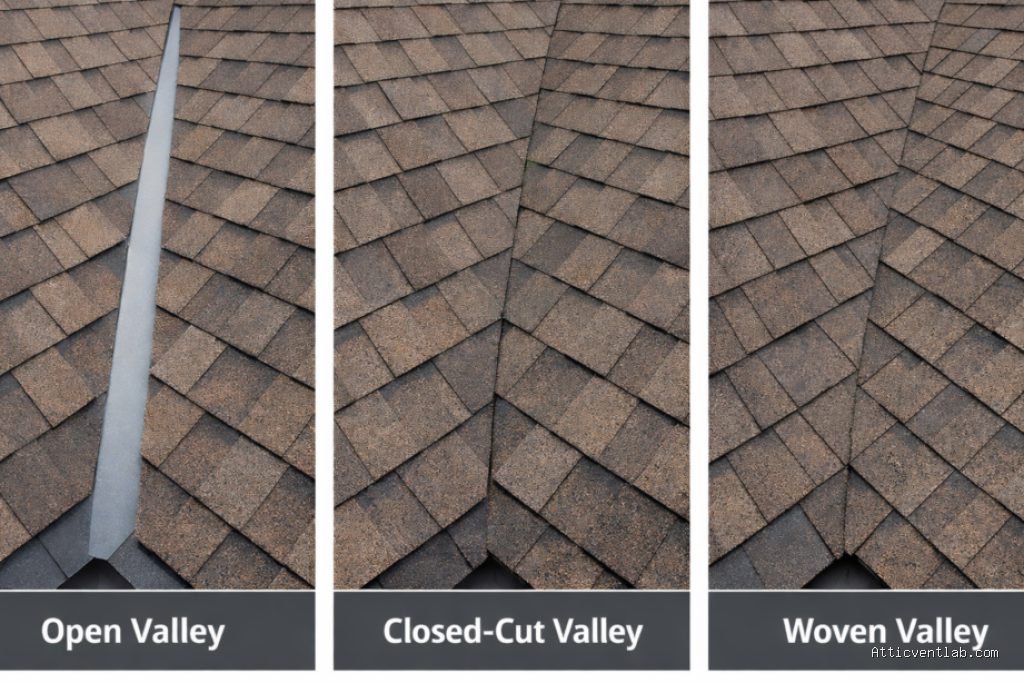
Atticventlab.com – Shingle valley weave methods trap debris because they create a flat, interwoven structural pocket that obstructs natural water flow, whereas open metal cuts utilize a smooth, V-shaped channel that promotes self-cleaning through gravity and hydraulic force.
Roofing professionals often debate the merits of various valley installation techniques. While weave methods are sometimes chosen for their aesthetic appeal—creating a seamless look where shingles blend across the valley—they are fundamentally flawed when it comes to debris management. Understanding the physics of how these valleys interact with environmental runoff is crucial for long-term roof health.
The Mechanics of Debris Accumulation in Weave Valleys
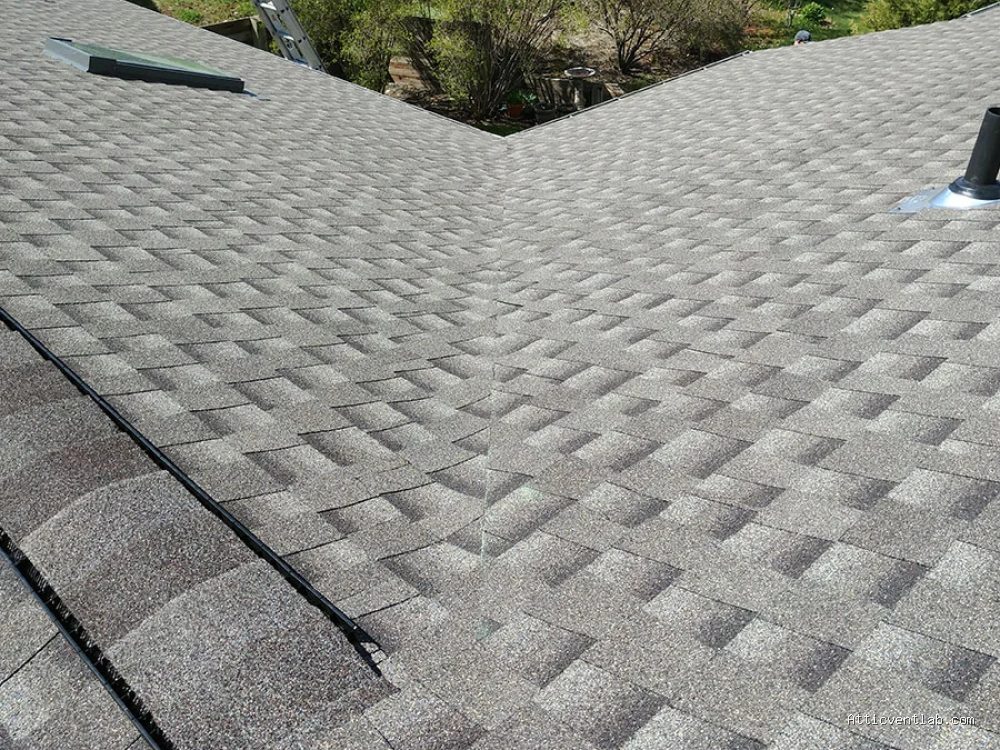
In a weave valley, shingles from both roof planes are layered over each other in an alternating pattern. This construction creates a series of horizontal “shelves” or ledges within the valley trough. When pine needles, leaves, or granular sediment wash down the roof, they encounter these overlapping shingle edges. Instead of sliding off the roof, the debris catches on the exposed edges of the weave, becoming trapped in the very path where water needs to flow freely.
Over time, this trapped material acts like a dam. It holds moisture against the shingles, accelerating their degradation and increasing the likelihood of water backup. In colder climates, this accumulation is even more dangerous; the moisture-soaked debris freezes and expands, potentially lifting the shingles and breaking the seal, which leads to ice damming and interior leaks.
Open Metal Cuts: The Engineered Alternative
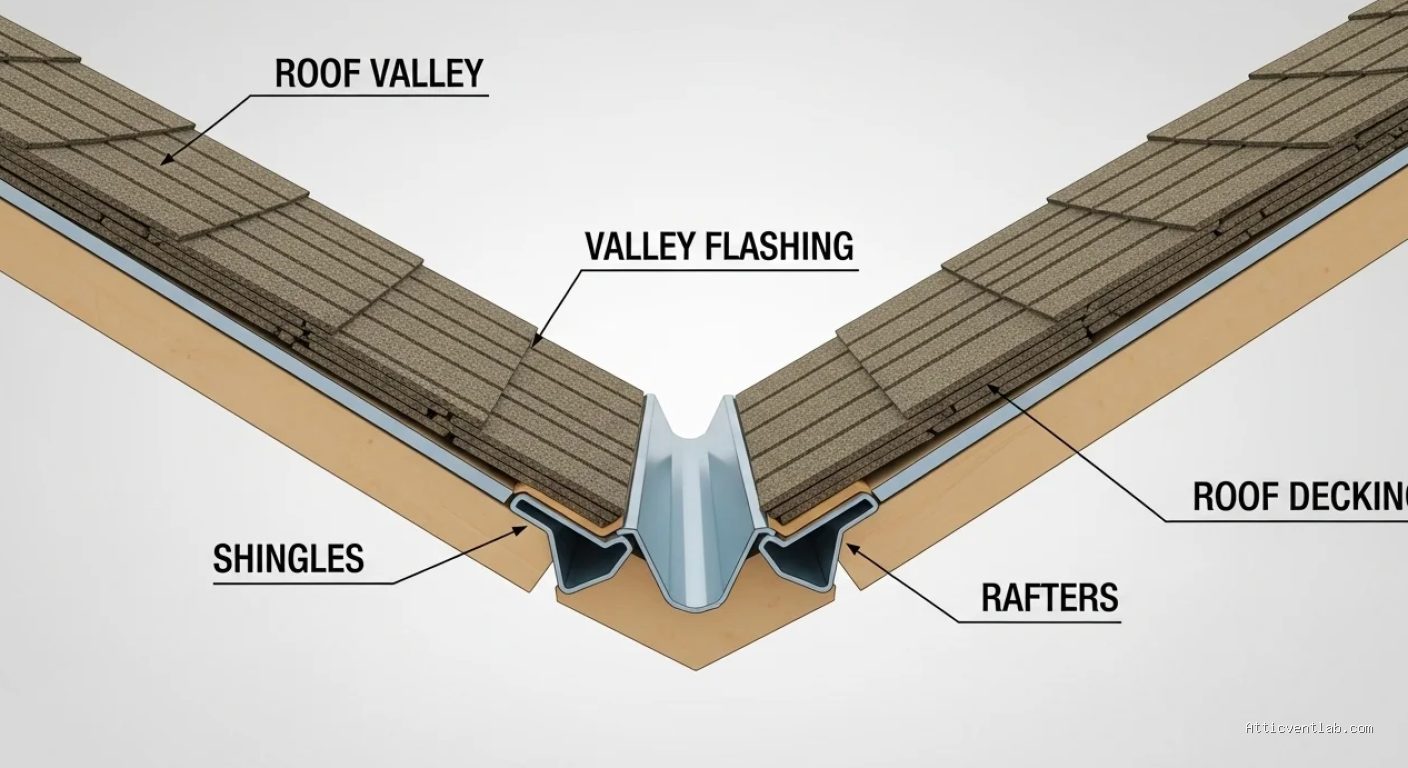
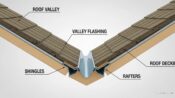
Conversely, an open metal cut involves installing a continuous, smooth metal flashing—typically galvanized steel, aluminum, or copper—down the center of the valley. The shingles are trimmed back so they do not meet in the center, leaving a clear, unobstructed channel. This design relies on the slick surface of the metal and the steep pitch of the valley to ensure that debris is washed away by rainfall rather than snagging on shingle tabs.
The hydraulic efficiency of an open metal valley is significantly higher. Because there are no obstacles to impede the flow of water and debris, the valley effectively cleans itself during every storm. This reduces the maintenance burden on the homeowner and extends the lifespan of the roofing system by preventing the accumulation of organic matter that fosters moss and algae growth.
Comparative Analysis of Valley Systems
| Feature | Weave Valley | Open Metal Cut |
|---|---|---|
| Debris Resistance | Low (traps material) | High (self-cleaning) |
| Installation Speed | Slow (labor-intensive) | Fast (standard practice) |
| Water Flow Velocity | Restricted by ledges | Optimized by smooth metal |
| Durability | Susceptible to rot/moss | Excellent longevity |
| Aesthetic Impact | Seamless/Uniform | Defined/Visible gap |
Practical Risks of Improper Valley Design
The primary risk of choosing a weave method for the sake of aesthetics is the “hidden” damage. Because the debris is caught under the overlapping shingles, homeowners often do not see the buildup until water has already breached the underlayment. By the time a leak is detected, the wood decking beneath the valley may already be compromised by dry rot or fungal decay.
Another common mistake is the failure to extend the underlayment properly in weave valleys. Even if the weave is installed with high-quality shingles, the lack of a secondary barrier often leads to failure. In contrast, an open metal cut provides a clear visual indicator of the valley’s condition, allowing for easy inspection and removal of any stray debris that might have lodged itself during a heavy windstorm.
Steps to Maintain a Healthy Valley System
If you currently have a roof with weave valleys, you must be more vigilant about maintenance. Follow these steps to minimize the risk of water damage caused by trapped debris:
- Perform a seasonal inspection of your roof valleys, specifically looking for signs of pine needles or leaf buildup.
- Use a soft-bristled broom or a leaf blower on a low setting to gently clear debris from the valley area, working from the top down.
- Never use high-pressure power washers on a shingle roof, as this will strip the protective granules and force water under the shingles.
- Check the bottom of the valley where it meets the gutter to ensure there is no obstruction preventing water from exiting the roof system entirely.
- If you notice recurring moss growth in the valley, consult a professional to apply a zinc or copper strip at the roof ridge, which can help inhibit organic growth via rain-activated metal ions.
Common Mistakes and Misconceptions
Read also: How to Flash Plumbing Vent Stacks on Standing Seam Metal Roof Panels
📷 Photo by design.udlvirtual.edu.pe
Many homeowners believe that weave valleys provide better protection because they appear “sealed.” This is a dangerous misconception. A weave is not a seal; it is a complex series of overlaps that are only as strong as the integrity of the shingles themselves. When those shingles begin to curl or lose granules, the weave becomes a sieve.
Another frequent error is the use of “closed-cut” valleys in areas with heavy tree cover. While a closed-cut valley is slightly better than a weave, it still creates a bottleneck compared to an open metal cut. For properties surrounded by deciduous or coniferous trees, the open metal cut is the only design that offers reliable, long-term performance against the inevitable influx of organic debris.
Frequently Asked Questions
Q: Can I convert a weave valley to an open metal valley during a roof repair?
📷 Photo by mkbestroofing.com
A: Yes, this is a common upgrade during a partial roof replacement or repair. It involves removing the shingles in the valley area, installing high-quality ice and water shield underlayment, and securing a new metal valley flashing before re-shingling the adjacent roof planes.
Q: Why do some contractors still recommend weave valleys if they trap debris?
A: Some contractors prioritize the “clean” look of a weave valley to satisfy homeowners who dislike the appearance of metal flashing. It is often a stylistic choice rather than a functional one, and it is usually recommended by those who favor aesthetics over long-term maintenance ease.
Q: How often should I clean my metal valleys?
A: Even with an open metal design, you should inspect your valleys at least twice a year—typically in the spring and late autumn. If your roof has a low pitch, you may need to clean them more frequently to ensure that small particles do not settle and create a dam.
Choosing the right valley system is a balance between visual preference and environmental reality. If your home is located in a forested area or a region prone to heavy seasonal leaf fall, prioritizing the functional superiority of an open metal cut will save you significant time, stress, and repair costs in the future.
📷 Photo by peakandvalleyroofing.com




1 Comments
[…] Read also: Why Shingle Valley Weave Methods Trap Debris Compared to Open Metal Cuts […]