

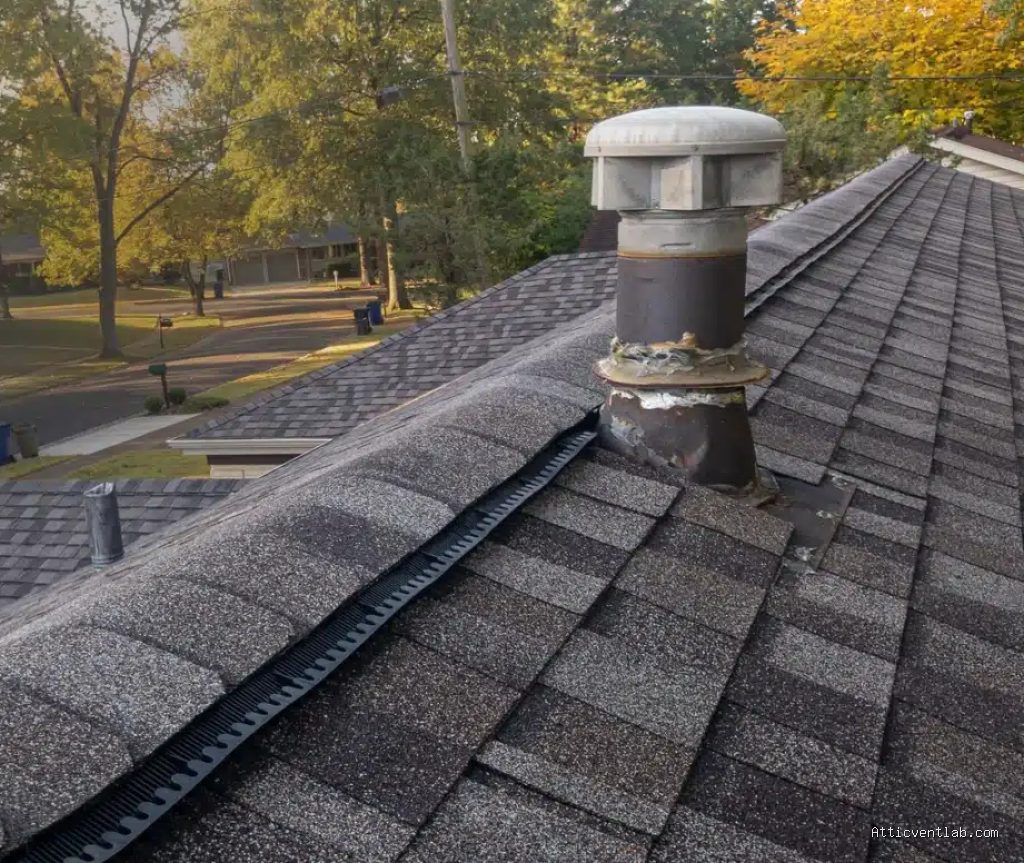
Atticventlab.com – Choosing between mesh ridge vent rolls and baffled plastic shingle caps depends primarily on your local climate, the specific profile of your roof shingles, and the required airflow capacity for your attic. While mesh rolls offer superior flexibility and weather protection in high-wind zones, baffled plastic caps provide rigid, consistent ventilation channels that are often easier to install on standard asphalt shingle roofs.
Understanding the Core Differences
The ventilation of your attic is the silent guardian of your home’s structural integrity. Improper ventilation leads to moisture buildup, which fosters mold, wood rot, and premature shingle deterioration. When deciding between mesh ridge vent rolls and baffled plastic shingle caps, you are essentially choosing between a conformable, filter-based system and a structured, baffled system.
Mesh ridge vent rolls are typically made from a non-woven, polyester or polypropylene material. Their primary strength lies in their ability to conform to various roof pitches. Because the material is porous, it allows air to escape while acting as a filter against debris, insects, and fine wind-driven snow. They are highly favored in regions with extreme weather fluctuations because the material does not become brittle in the cold.
Baffled plastic shingle caps are manufactured from high-density polyethylene or similar rigid plastics. They feature internal baffles designed to create a “venturi effect,” which pulls air out of the attic more forcefully as wind blows over the ridge. These are structurally rigid, meaning they maintain a precise gap size for airflow regardless of the pressure applied by the cap shingles placed over them.
Comparison Table: Mesh vs. Baffled Plastic
| Feature | Mesh Ridge Vent Rolls | Baffled Plastic Caps |
|---|---|---|
| Flexibility | High (Conforms to any pitch) | Low (Rigid structure) |
| Airflow Efficiency | Moderate (Filter-dependent) | High (Venturi effect) |
| Installation Difficulty | Easy (Roll-out application) | Moderate (Requires precise cutting) |
| Weather Resistance | Excellent (Filters snow/dust) | Good (Internal baffles block rain) |
| Longevity | High (Resists degradation) | Very High (UV-stabilized plastic) |
Factors Influencing Your Choice
The most significant factor in your decision should be the architectural style of your roof. If your home features a complex roofline with many hips or varying pitches, the flexibility of mesh rolls is a massive advantage. You can easily transition these rolls across different angles without needing specialized adapters. Conversely, if you have a straightforward, long, straight roof ridge, the rigid nature of plastic baffled caps ensures a uniform look and consistent airflow along the entire length.
Climate is the second pillar of your decision. If you live in an area prone to “dry powder” snow—the kind that turns into fine dust during blizzards—mesh rolls can sometimes become clogged or allow snow to infiltrate if the mesh density isn’t high enough. Baffled plastic caps generally handle heavy rain and snow better because the physical baffles act as a labyrinth, forcing moisture to drop out before it can enter the attic space.
Installation Guide: Ensuring Proper Attic Ventilation
Regardless of the material you choose, the installation process is critical to performance. If you install these products incorrectly, you risk creating “short circuits” in your ventilation system, where air enters one vent and immediately exits another without cooling the attic.
- Clear the ridge gap: Ensure your roof deck has a gap of at least 1 to 2 inches on both sides of the ridge board. Do not cut through the ridge board itself.
- Install the base: Roll out your mesh or place your plastic sections starting from the downwind end of the ridge to prevent wind-driven rain from entering the seams.
- Secure the material: Use the manufacturer-provided nails, which are typically longer than standard roofing nails, to penetrate through the vent and into the trusses.
- Cap shingle application: Apply your ridge cap shingles over the vent. Ensure the nails used for the shingles do not penetrate the internal drainage channels of the plastic baffles.
- Seal the ends: Use end caps or cut shingles to seal the very start and finish of the ridge vent to prevent bird and insect entry.
Common Pitfalls and Maintenance
One of the most common mistakes homeowners make is using “caulk” or excessive roofing cement to seal the edges of ridge vents. This is a fatal error. Ridge vents rely on a clear path for air; blocking the edges with heavy sealants effectively chokes the ventilation system, leading to ice damming in the winter and overheating in the summer.
Another issue is “paint-over.” Sometimes, during a roof repair or general exterior painting, the ridge vent is accidentally painted. This clogs the tiny pores of mesh rolls or the intake slots of plastic caps. Always ensure the vent remains free of paint, debris, and excessive shingle granules.
Q: Can I install a ridge vent on a roof that has gable vents?
A: It is generally not recommended. Combining gable vents with ridge vents can disrupt the natural airflow pattern, causing the air to move horizontally rather than pulling heat up from the soffits, which reduces the efficiency of both systems.
Q: How often do I need to inspect my ridge vent?
A: You should inspect your ridge vent annually, ideally after the winter season. Look for signs of insect nesting, shingle granule buildup, or any shifted cap shingles that might have loosened due to high winds.
Choosing between these two systems ultimately comes down to whether you prioritize the ease of installation and flexibility (Mesh) or the structural airflow optimization (Baffled Plastic). Both are vastly superior to older, static vent systems, provided they are installed with adequate soffit intake ventilation to allow for a complete air cycle.
📷 Photo by weroof.com


Leave a Reply