

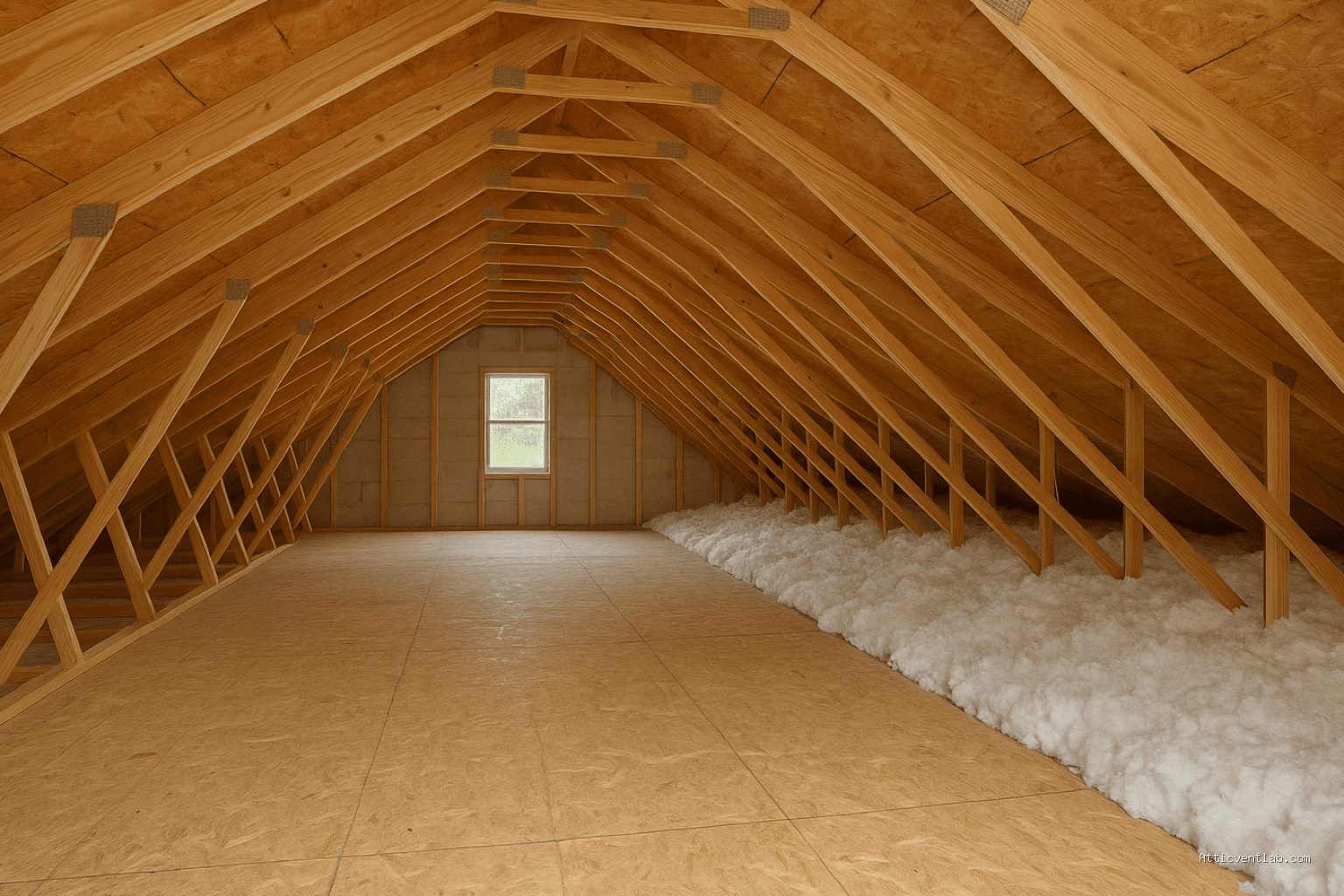
Atticventlab.com – Heavy moisture condensation under an attic plywood roof deck is primarily caused by an imbalance between warm, moist indoor air leaking into the attic and inadequate ventilation, which prevents that moisture from escaping before it condenses on cold surfaces.
When warm air from your living space migrates upward, it carries water vapor. As this air hits the cold underside of the plywood roof deck—especially during winter months—the temperature drops below the dew point, causing the water vapor to turn into liquid droplets. If this cycle continues, it leads to significant structural damage, mold growth, and compromised insulation efficiency.
Common Causes of Attic Condensation
The most frequent culprit is air leakage from the house into the attic. Most homeowners assume their attic is sealed, but gaps around plumbing stacks, electrical wiring, recessed lighting, and attic hatches act as chimneys for moist air. This process, known as the stack effect, draws warm air from the lower levels of your home into the attic space.
Another major factor is blocked soffit vents. If your attic insulation has been installed incorrectly or shifted, it may be covering the intake vents at the eaves. Without a constant flow of fresh air, the moisture-laden air remains trapped, stagnating against the plywood deck. Furthermore, high-humidity activities within the home, such as running unvented clothes dryers or excessive showering without proper bathroom exhaust fans, drastically increase the amount of moisture that migrates to the attic.
The Risks of Neglected Moisture
Persistent condensation is not merely a cosmetic issue. When plywood remains damp, the wood fibers begin to swell and delaminate, losing their structural integrity. Over time, this leads to roof deck rot, which can require an expensive full roof replacement. Beyond the wood itself, the moisture often drips onto fiberglass insulation, causing it to clump and lose its R-value, effectively rendering your attic insulation useless.
Mold and mildew are the most immediate health risks. These fungi thrive in the dark, damp environment of an attic. Once mold spores take hold on the plywood, they can easily migrate into the living spaces of your home through air leaks, potentially triggering respiratory issues and allergic reactions for your family.
Comparing Moisture Control Strategies
| Strategy | Effectiveness | Primary Benefit |
|---|---|---|
| Air Sealing Attic Floor | High | Stops moisture migration at the source |
| Installing Baffles | Medium | Ensures intake vents remain clear |
| Increasing Roof Vents | Medium | Facilitates faster moisture exhaust |
| Dehumidifiers | Low | Ineffective for large, open attic spaces |
Step-by-Step Guide to Reducing Attic Moisture
Addressing attic moisture requires a systematic approach. Follow these steps to mitigate the condensation issue effectively:
- Inspect the attic floor for air leaks. Use expanding foam or caulk to seal gaps around plumbing pipes, electrical wires, and recessed light fixtures.
- Check your attic hatch or pull-down stairs. If they are not weather-stripped and insulated, they are likely the single largest source of air leakage in your home.
- Verify that all bathroom and kitchen exhaust fans vent directly to the outside of the house, rather than dumping moist air into the attic space.
- Examine your soffit vents. If insulation is blocking them, install rafter baffles to maintain a clear channel for air to flow from the soffit to the ridge vent.
- Measure your current attic ventilation ratio. A common standard is 1 square foot of net free vent area for every 150 square feet of attic floor space.
Identifying the Signs of Trouble
You do not need to wait for a roof failure to know there is a problem. Inspect your attic during the winter, specifically on a cold day. Look for frost buildup on the underside of the plywood or on the nails protruding through the deck. If you see dark staining or black spots on the wood, this is a clear indication that condensation is happening frequently and mold is starting to develop.
Another subtle sign is the smell of mustiness. If you notice a damp, earthy odor when you enter the attic, it is a warning sign that moisture levels are too high. Additionally, check your insulation; if it feels damp or shows signs of water staining, your condensation issues are already affecting your home’s thermal efficiency.
Common Mistakes Homeowners Make
One of the most frequent mistakes is simply adding more vents to the roof without checking for air leaks. If you add more ventilation but do not seal the ceiling below, you are essentially creating a stronger suction that pulls more warm, moist air from your home into the attic. Always prioritize sealing the house-to-attic connection before adding more ventilation.
Another error is assuming that high-quality insulation solves the problem. Insulation is designed to stop heat transfer, not moisture migration. In fact, if you add more insulation without air sealing, you may inadvertently make the condensation worse by creating a colder attic environment, which lowers the dew point even further.
Q: Can I just run a dehumidifier in my attic to stop the condensation?
A: No, dehumidifiers are designed for enclosed, conditioned spaces. An attic is a semi-conditioned or vented space; running a dehumidifier there will be ineffective because it cannot keep up with the constant influx of humid air from the house below.
Q: Why does the condensation only happen in the winter?
A: The temperature difference is the driver. In winter, your home is warm and the outside is cold. This creates a high pressure difference that pushes moisture upward, and the cold roof deck provides the perfect surface for that moisture to condense.
Q: Is painting the plywood with mold-resistant paint a good fix?
A: Painting or applying mold-killing chemicals is only a temporary solution. Unless you fix the underlying moisture source—the air leaks and ventilation issues—the mold will eventually return, and the structural wood will continue to degrade.
📷 Photo by foxhavenroof.com



Leave a Reply