

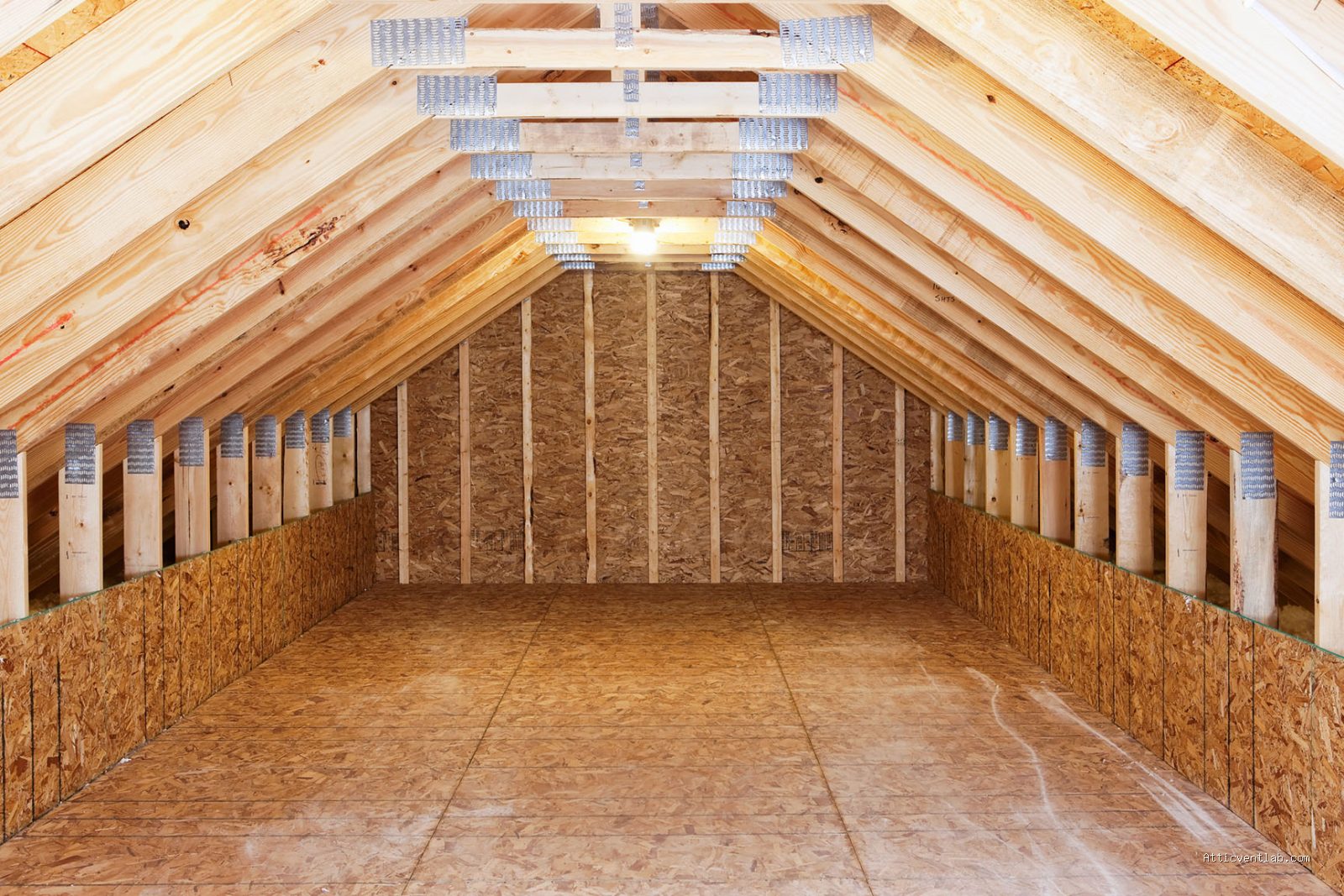
Atticventlab.com – Water stains appear on attic joists near gable end vents after storms because wind-driven rain penetrates the vent louvers, bypassing the protective mesh and settling on the structural wood framing beneath.
The appearance of moisture marks or dark water stains on attic joists following a storm is a common concern for homeowners. While it is easy to assume the roof itself is leaking, the gable end vent is often the overlooked culprit. When storms bring high-velocity winds and torrential rain, the design of standard gable vents can actually pull water into the attic space rather than keeping it out.
The Mechanics of Wind-Driven Rain
Gable end vents are designed to promote passive cross-ventilation, allowing hot air to escape the attic. However, these vents are not airtight. During a storm, wind pressure creates a high-pressure zone on the windward side of the house. If the rain is falling at an angle or being pushed by strong gusts, the water droplets can easily bypass the exterior louver slats.
Once the water enters the vent, it tends to run down the interior side of the frame or onto the surrounding joists and rafters. Because the wood in an attic is often unfinished and porous, it absorbs this moisture rapidly, leading to the telltale dark staining. If this happens repeatedly, it creates a cycle of wetting and drying that can compromise the structural integrity of the wood over time.
Common Signs of Gable Vent Leaks
Identifying the source of the water is essential before attempting any repairs. You can distinguish between a roof leak and a vent leak by looking at the location of the stains. If the water marks are localized strictly around the gable vent frame and the joists supporting that frame, it is almost certainly a vent issue.
Conversely, a roof leak usually manifests as streaks running down from the roof deck or around roof penetrations like plumbing stacks and chimneys. Other signs of gable vent issues include damp insulation directly beneath the vent, rust on the vent fasteners, or the presence of mold or mildew growing specifically on the wood framing near the gable end.
Comparison of Attic Ventilation Issues
| Issue Type | Primary Cause | Stain Location | Severity |
|---|---|---|---|
| Gable Vent Infiltration | Wind-driven rain | Joists near gable wall | Moderate |
| Roof Flashing Failure | Degraded sealant | Near chimney or valley | High |
| Condensation | Poor airflow/humidity | Widespread/General | Low to Moderate |
Risks of Ignoring Attic Water Stains
Ignoring water stains on your joists can lead to more than just aesthetic damage. Wood that remains damp for extended periods is a breeding ground for wood-decay fungi. Once the moisture content of the wood stays above 20 percent for a significant duration, the risk of rot increases exponentially. This can soften the joists, eventually requiring costly structural repairs or joist reinforcement.
Furthermore, damp insulation loses its R-value, meaning it becomes less effective at keeping your home energy-efficient. If the moisture is trapped in the attic, it can also lead to poor indoor air quality, as mold spores from the attic can migrate into the living spaces of the home through light fixtures, ceiling cracks, or HVAC ductwork.
Steps to Mitigate Gable Vent Moisture
If you have confirmed that your gable vents are the source of the moisture, you can take practical steps to prevent future damage. Follow this process to secure your attic against storm-driven rain:
- Inspect the interior of the gable vent for signs of debris, which can trap moisture and direct water flow onto the joists.
- Install a wind-baffle or a custom-fit rain shield on the interior side of the vent, ensuring it does not completely block the necessary airflow.
- Apply a high-quality, exterior-grade silicone sealant to any gaps between the vent frame and the siding to prevent water from wicking behind the trim.
- Consider replacing standard louvered vents with specialized storm-resistant vents that feature deeper slats or integrated rain-deflection baffles.
- Check the attic insulation levels to ensure that no insulation is blocking the vent opening, which can cause moisture to pool inside the attic space.
Preventing Future Issues
Maintenance is key to preventing water stains. Twice a year, especially before the start of the heavy storm season, perform a visual inspection of your attic. Use a moisture meter if you suspect dampness but cannot see visible staining. If you notice that your gable vents are consistently allowing water in, you might need to reconsider your attic ventilation strategy.
In some cases, homeowners opt to seal the gable vents entirely and move to a ridge vent system if the attic configuration allows. A ridge vent provides more consistent airflow and is generally much more resistant to wind-driven rain because it is protected by the roof peak and specialized shingles.
Frequently Asked Questions
Q: Should I paint over the water stains on my attic joists?
A: Do not paint over the stains until you are certain the leak is fixed and the wood is completely dry. Painting wet wood traps moisture inside, which accelerates rot. If the wood is structurally sound, you can clean the surface with a mild bleach solution or a wood cleaner once the area is dry.
Q: Is it normal to have some moisture in the attic during a hurricane or severe storm?
A: While some minor misting can occur during extreme weather, significant water accumulation is not normal. If you see active dripping or saturated wood, your gable vents likely need better rain protection or weather-stripping to handle the intense pressure of severe storms.
Q: Can I use foam to seal the gaps in the gable vent?
A: Avoid using expanding foam to seal the vents themselves, as this will block the essential cross-ventilation needed to prevent condensation. Only use sealants around the exterior frame where the vent meets the siding to prevent water from entering through the perimeter.
Taking a proactive approach to attic maintenance saves money and protects your home’s structural integrity. By understanding that gable vents act as both an entry for air and, unfortunately, for water, you can implement the right defenses to keep your attic dry regardless of the weather conditions outside.
📷 Photo by donaldsontimberengineering.co.uk



Leave a Reply